Industry Insights
The 4 Keys of AI Transformation—A Blueprint for AI-Driven IT
By Ideas @ AppDirect / December 11, 2025

In this article:
Digital transformation is no longer just a buzzword—it’s the defining factor separating companies that thrive from those that struggle in today’s rapidly evolving IT landscape. As artificial intelligence accelerates the pace of change, organizations must fundamentally rethink how they build, deliver, and manage technology services. This is not about AI as a mere add-on or productivity booster, but as a core driver of innovation and operational efficiency, reshaping business models, workflows, and customer experiences across industries.
In his keynote address at Thrive 2025, AppDirect Chairman and CEO noted, “AI's adoption cycle is nearly ten times faster than earlier industrial revolutions. This unprecedented speed means businesses cannot simply retrofit AI into existing systems—they must embed it deeply into their platforms, ecosystems, and operations to unlock its full potential and remain competitive."
In this article, we explore the four essential keys businesses must focus on to successfully navigate digital transformation in the AI era. You’ll learn how foundational pillars like digital platforms, ecosystems, channels, and hubs combine to drive scalable innovation, operational efficiency, and exceptional customer experiences. These actionable strategies form a comprehensive blueprint for thriving amidst rapid technological change.
The 4 keys of AI transformation
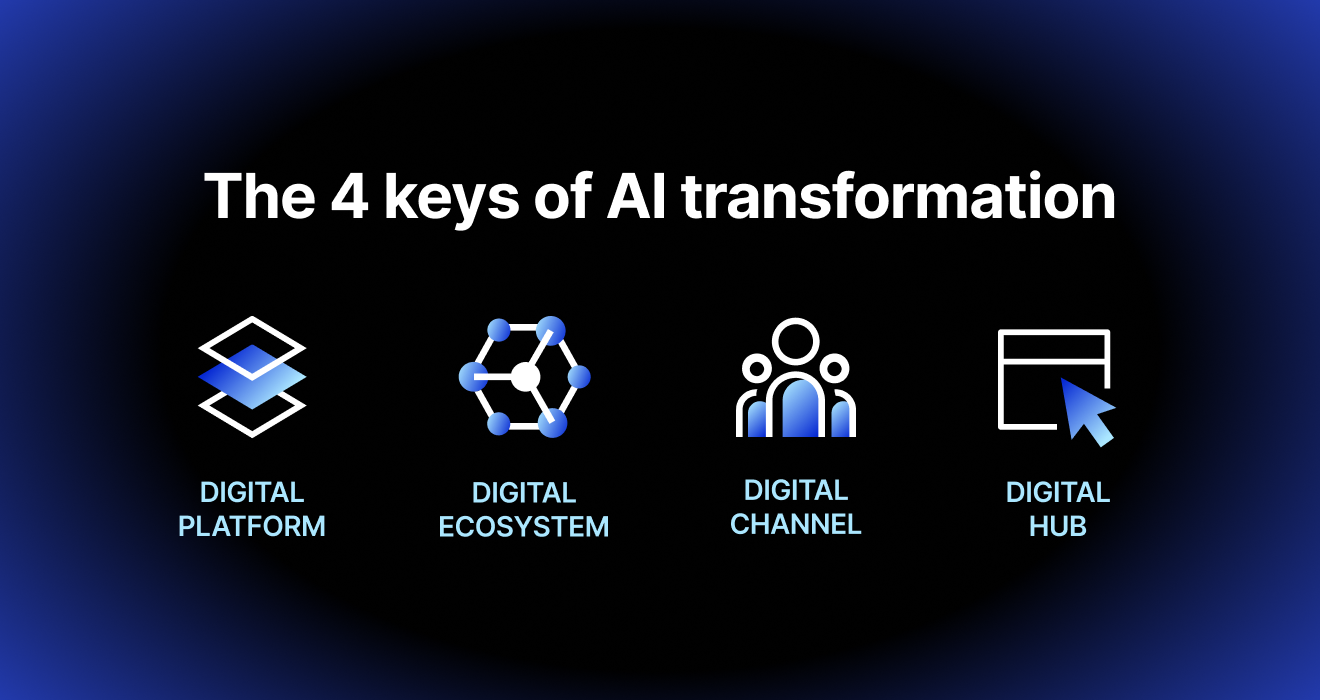
At AppDirect, we’ve identified four foundational pillars that define successful digital transformation in the age of AI, as follows:
Digital platform—The foundational pillar platform needed to enable businesses to scale and innovate by providing a platform as a service for building new products and experiences
Digital ecosystem—A vibrant ecosystem of partners that enable companies to broaden their core offerings, extend their capabilities, and create additional value.
Digital channel—Vital in offering effective ways to reach customers through channel partner networks and indirect sales models
Digital hub—The pillar that unifies billing, identity, and data management, creating a seamless, AI-enhanced user experience at the heart of your customer’s digital journey.
These keys aren’t abstract concepts—they’re actionable strategies that guide investment, innovation, and operations across every part of the organization. Together they form a comprehensive framework for sustainable growth, operational excellence, and customer success in an AI-enabled world.
1. Digital platform—Enabling scalable innovation
The first key to AI transformation is building a digital platform that allows businesses to scale, innovate, and adapt rapidly.
A digital platform allows companies to offer a platform-as-a-service, enabling others to build new products and experiences on top of your infrastructure.
Platforms reduce barriers to entry for new products, streamline development, and enable organizations to respond to market changes with agility.
Platforms create horizontal scaling opportunities by connecting suppliers, developers, and customers on a single ecosystem, forming the foundation for exponential growth.
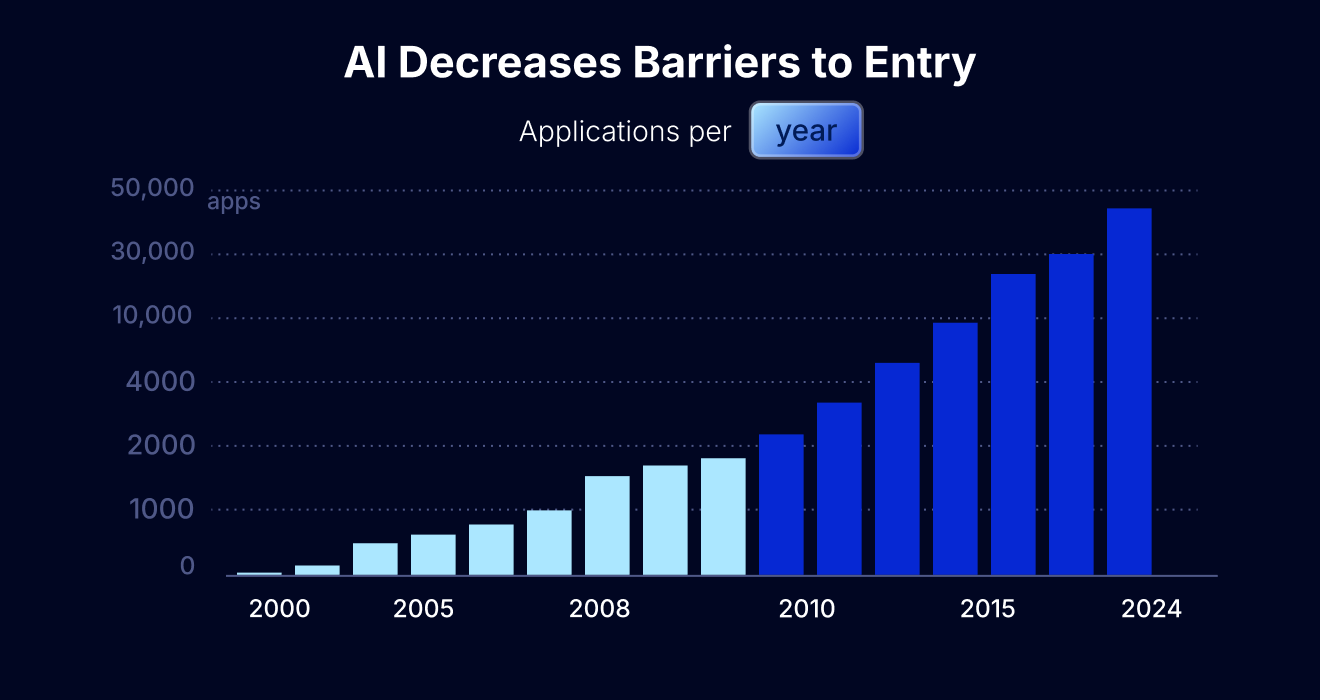
AI amplifies the impact of platforms by accelerating development cycles, automating routine tasks, and enabling users with limited tech skills to vibe code new applications from natural language prompts. This dramatic shift is just getting started in lowering entry barriers to building, releasing, and monetizing applications. It brings high-quality innovation within reach of many more companies.
AI-driven platforms also facilitate data-informed decision-making, integrate intelligent automation, and enable real-time product updates, all essential for modern competitive advantage.
AI’s game-changing role in platform development
Describing the astonishing impacts AI is having on platform development, Desmarais told Thrive attendees: “In 2024, by our research and calculations, we could identify 50,000 enterprise applications in existence. Who could have imagined what would happen next? Since then, vibe-coding platforms like Lovable and Vercel have launched, enabling anyone to vibe code using natural language prompting to conjure their software dreams into existence. What’s staggering is that newly AI-empowered developers are now publishing over 300K new applications a day."
“And we expect millions of new applications to launch by next year, from our 50K in 2024. No matter how you cut the data, we live in a brave new enterprise software world,” he added.
He also discussed the impacts of AI on AppDirect’s own platform development, noting: “By collapsing development costs as a barrier to entry, AI now makes platforming mission-critical. For example, when we look at AppDirect, the number of similar-sized projects that we launch in a given year has accelerated dramatically, doubling the amount of output our engineers can generate.”
2. Digital ecosystem—Harnessing the power of partnerships
No company can thrive in isolation in today’s interconnected digital economy. A critical element of successful digital transformation is building a vibrant ecosystem of partnerships that broadens core offerings and drives additional value. By integrating third-party developers, vendors, and services within their network, organizations can significantly extend their capabilities without the high costs and risks of building everything in-house.
Unlocking growth through collaboration
Ecosystems lower development costs while opening new revenue streams and delivering better customer experiences. They enable companies to respond quickly to changing customer needs through collaborative innovation, creating a virtuous cycle of mutual growth and agility.
Artificial intelligence is accelerating this collaboration by automating integration processes, facilitating smarter partner selection, and enabling shared analytics that drive joint value creation. This empowers ecosystem partners to innovate faster, scale more efficiently, and deliver increasingly advanced solutions at lower costs.
The critical role of ecosystems today
As AppDirect Chairman and CEO Nick Desmarais highlighted in his Thrive 2025 keynote, “The top performers today all have vibrant developer ecosystems. They onboard, distribute, and monetize third-party partners.”
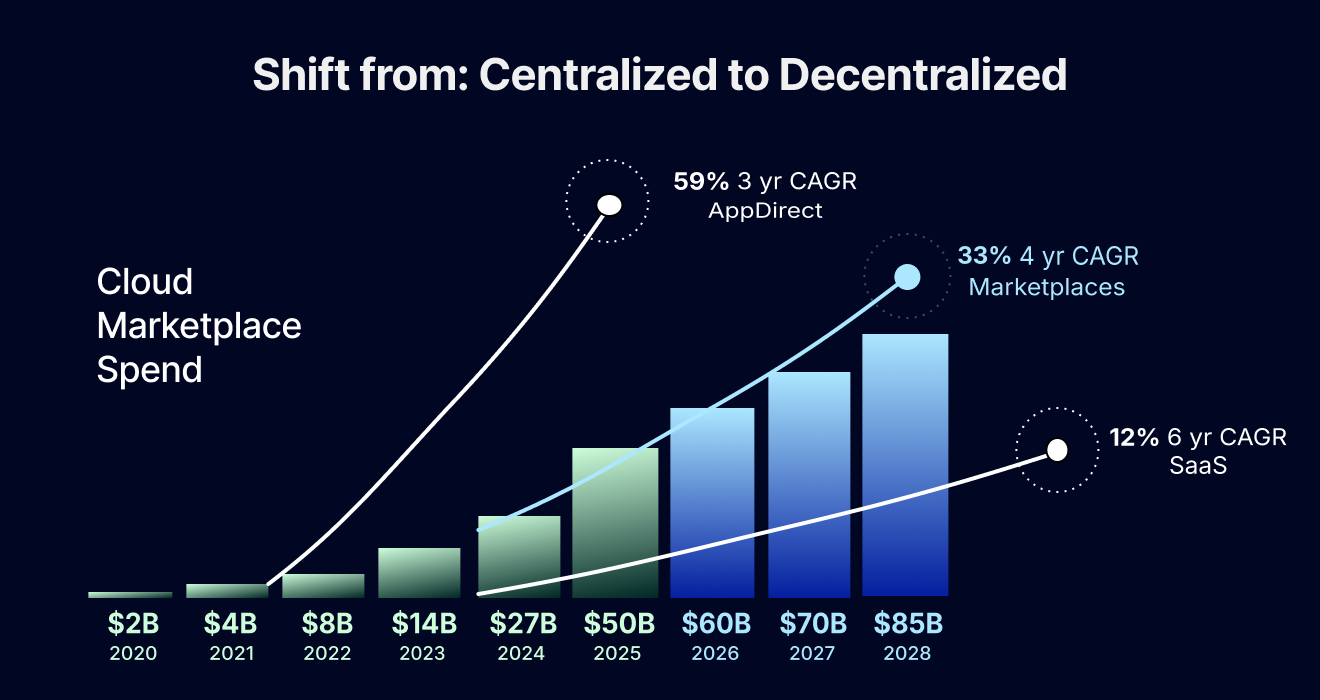
The scale and speed of ecosystem growth are impressive: gross merchandise volume flowing through marketplaces is increasing at 30% annually—20 points above overall SaaS market growth. Technology services through AppDirect’s platforms are growing even faster, at 50%. But this explosive growth isn’t driven solely by platform owners. Desmarais noted that partners and advisors play a pivotal role, with “fifty percent of these marketplace sales being advisor-driven.”
AI’s impact on build vs. buy dynamics
AI is also shifting traditional build-versus-buy decisions. As compute and development costs decline, the price-to-value proposition of internal builds improves, prompting a predicted rise in internal builds relative to buys in competitive markets.
This has significant implications for ecosystems. “Having an ecosystem really becomes paramount because it allows you to invite third-party developers to a long tail of features and benefits, while keeping capital expenditures in check.”
This hybrid approach allows companies to maintain a competitive value-price balance by selectively buying or building capabilities while leveraging ecosystem innovation.
Partnering for retention and profitability
Partners have a unique opportunity to build ecosystems around core offerings by leveraging marketplace environments and capturing shared benefits—reducing churn through cross-selling and deepening customer relationships. Industry research shows that a modest 5% improvement in customer retention can translate into a 25% increase in profitability, underscoring the power of ecosystems as a strategic growth lever.
3. Digital channel—Optimizing go-to-market reach
The third key to AI transformation focuses on efficiently reaching customers through channel partner networks and indirect sales models, as AI reshapes distribution by lowering production costs.
A strong channel strategy allows businesses to:
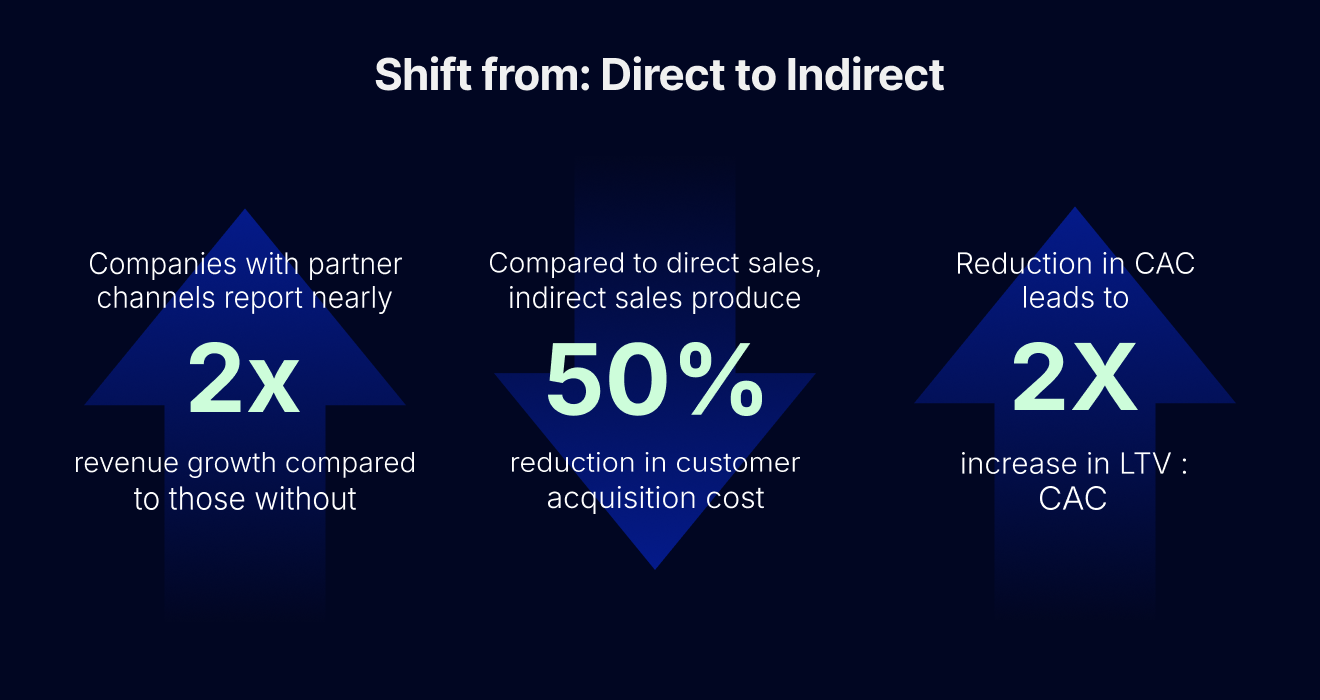
Reduce the cost of customer acquisition (CAC) by leveraging partner relationships
Increase customer lifetime value (LTV) by delivering relationship-driven commerce at scale
Adapt rapidly to changing market dynamics while maintaining customer trust and satisfaction
Navigating the new battleground: Distribution
The impact of AI-driven innovation means that while development costs are falling, companies are seeing a shift in where capital must be invested. With direct marketing costs, like cost per click, set to more than double, distribution has become the critical battleground for growth. To stay competitive and shield against rising acquisition costs, businesses are turning their focus to indirect sales channels.
“As AI drives down production costs, the new battleground for companies is distribution. Winning the race means mastering go-to-market through partner channels that offer scale and efficiency no direct approach can match.”
—Nicolas Desmarais, AppDirect
Channel partnerships enable this strategic shift. By cultivating vibrant partner communities, companies can expand their reach more cost-effectively.
Beyond cost savings, partners deliver differentiated value by fostering deeper customer relationships. Research shows that 70% of businesses prefer relationship-driven commerce channels over direct buying. This human connection spans the entire customer journey—from purchasing to onboarding and support—and is key to driving higher lifetime value.
To capitalize on this, successful businesses invest in comprehensive commerce platforms supporting partners with tools for quoting, ordering, commissions, and sales enablement. Training programs, sales enablement, and ongoing support further empower partners to sell effectively and deepen customer engagement.
“The top performers today all have vibrant partner communities that drive growth by combining scale, trust, and deep customer relationships. Channel partnerships aren’t just a distribution tactic—they’re a strategic differentiator in an AI-driven market.”
—Nicolas Desmarais, AppDirect
This ecosystem approach not only reduces churn but also helps partners capture a greater share of wallet across categories. Together, these elements make optimizing go-to-market reach through channel partnerships an indispensable driver of growth in today’s AI-powered landscape.
4. Digital hub—Centralizing customer experiences
Digital hubs unify identity, billing, and data management to create a seamless, AI-enhanced user experience. As applications and services proliferate rapidly, this centralization reduces friction for customers and lowers switching costs—making it easier for them to stay engaged over time.
The perfect churn storm
“Until recently, complicated user experiences insulated companies from churn. But with modern AI chatbots replacing traditional interfaces, that protection disappears—and companies must unify their experience to retain customers.”
—Nicolas Desmarais, AppDirect
Recent studies show a stark decline in SaaS companies’ positive net retention rates—from about 120% down to 110% in just 12 to 18 months, highlighting the urgency of addressing retention through better customer experiences.
Desmarais calls this “the perfect churn storm”, driven by the surge in new apps and a sharp reduction in switching costs.
“As AI reduces switching costs, companies can no longer afford to offer anything but the most seamless of online experiences,” he said, making it vital for companies to protect their revenues and wallet share. “Until recently, complicated user experiences insulated companies from churn. But with modern AI chatbots replacing traditional interfaces, that protection disappears—and companies must unify their experience to retain customers.”
A central hub to drive greater lifetime value through unified lifecycle management
To effectively reduce churn and increase customer satisfaction, a digital hub should offer:
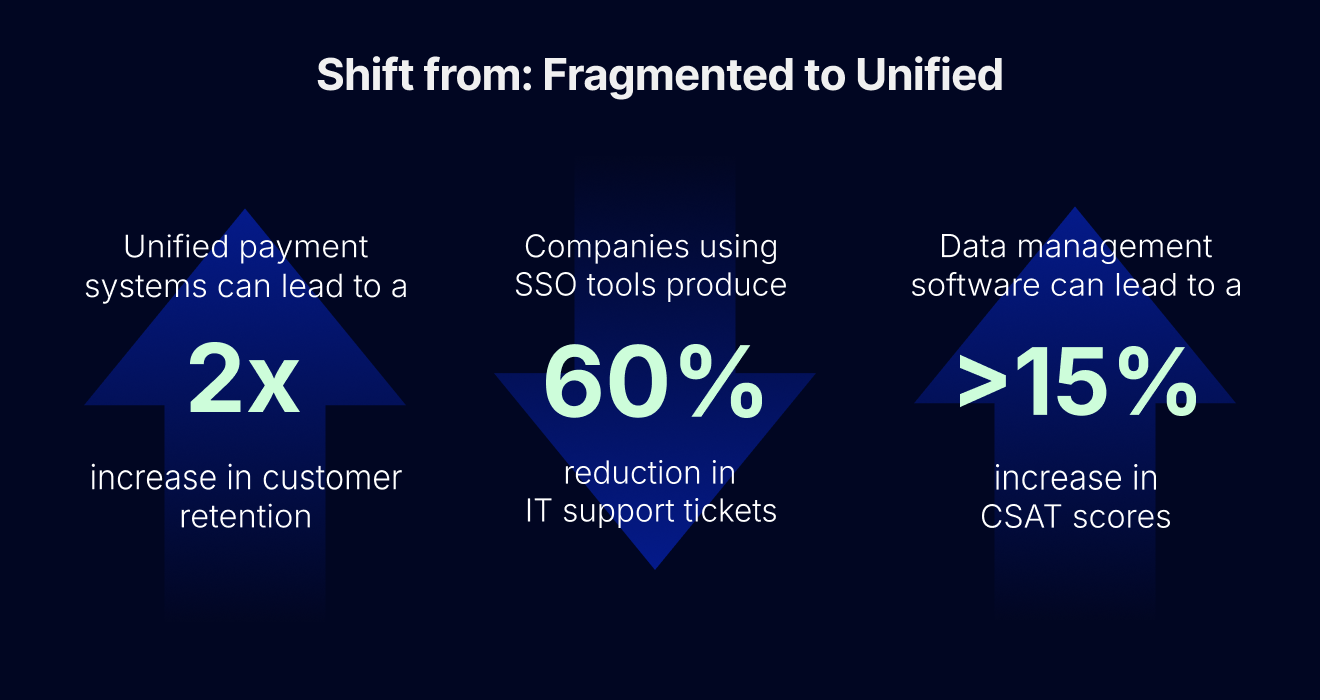
Unified payments that simplify billing and reduce customer effort
Single sign-on (SSO) and streamlined support that cut down on password resets, and IT support ticket volume
Unified data management and search that enable customers to find a 360-view of the data they need to make more informed decisions
Additionally, with the rise of shadow IT and the growing complexity of managing IT solutions, it’s essential for customers to have a seamless way to navigate between apps and functions on a single, centralized platform—allowing them to gain visibility and efficiently manage their entire tech stack, from infrastructure to AI, cloud connectivity, and mobility.
“By the same token, offering a unified experience to manage single sign-on (SSO), support tickets, and passwords dramatically improves CSAT because customers want to get on with their day not looking for data,” added Desmarais. “The top industry performers all have digital hubs where identity, billing, and data management are unified to offer seamless end-customer experiences—reducing churn and maximizing lifetime value.”
Why the four keys combined provide a strategic advance
Each of the four keys is transformative on its own, but when combined, they create a powerful strategic blueprint for AI-driven IT and B2B digital commerce, enabling companies to stay ahead in an increasingly competitive digital landscape. Organizations that integrate digital platform, ecosystem, channel, and hub strategies can:
Scale rapidly while reducing operational complexity
Increase customer stickiness by delivering connected, AI-powered experiences that deepen engagement
Tap into more channels to reach buyers where they are and diversify revenue streams
Accelerate innovation cycles with platform-based development and reuse
Reduce reliance on fragmented tools by consolidating into a unified digital foundation
Strengthen partner ecosystems to expand capabilities and reduce go-to-market friction
Empower employees and partners with AI-augmented workflows
Deliver seamless, connected experiences that delight customers and drive sustainable growth
At AppDirect, these four keys form the foundation of our approach to AI transformation. They guide how we innovate, collaborate with partners, and empower businesses to thrive in an era defined by rapid technological change.
View all the insights from Thrive 2025
We’ve pulled all of the Thrive resources together for you into a Thrive25 resource hub, where you can watch the keynotes and other main stage addresses. You can also access dozens of resources related to the breakout sessions, including presentations, customer marketing toolkits, sales guides, articles, and other content that can help you take your business to the next level.
Visit the Thrive25 resource hub.
Related Articles

Strategy & Best Practices
Building a Human-Oriented AI Strategy: Elevating Workplace Interactions with AI Companions
AI is transforming the workplace by enhancing human potential rather than replacing it. Discover how AI companions can boost creativity, streamline tasks, and support smarter decisions—helping teams work better together and innovate faster.By Rebecca Muhlenkort / AppDirect / July 9, 2025

Strategy & Best Practices
Fast-Tracking AI Value: Strategies for Immediate Impact
Turn AI's potential into a profit-generating reality for your business. Discover how to pinpoint impactful AI opportunities, choose the right partners, and start generating immediate value.By Denise Sarazin / AppDirect / April 8, 2026

News & Updates
The Three Reasons Enterprise AI Stalls, and How Devs.ai Clears All of Them
Your teams have been waiting for this. Devs.ai by AppDirect just expanded into a full enterprise AI platform, and what's now possible has genuinely shifted. Any team can build production-ready AI apps on their own data in days. A governed private AI store gives every employee something better than any public tool they were using before. And soon, Devs.AI will connect natively to the 2,000+ services your business already runs on. This is what enterprise AI looks like when it's built right.By Denise Sarazin / AppDirect / June 1, 2026