Strategy & Best Practices
From Break-Fix to Strategic Partner: A Q&A on How MSPs are Winning Right Now
By Rebecca Muhlenkort / August 26, 2026

In this article:
TL;DR
MSPs are under pressure to do more than maintain infrastructure and respond to issues. Customers now expect guidance across security, cloud, communications, and AI. Jared Adamcik, Dave Wallace, and Mariane Louvet explain why AI is emerging as the biggest growth narrative, where MSPs still hesitate, and how platforms that reduce complexity can help them capture more of the customer’s total tech spend without adding headcount.
“Customers already want broader support. The MSPs that win are the ones that can deliver it without creating more operational drag.”— Jared Adamcik, Senior Director MSP Channel
A few years ago, many MSPs were still primarily seen as the team that kept devices running, networks stable, and tickets moving. Today, that expectation has changed dramatically.
Today, customers want more than break-fix support. They want guidance across security, cloud, communications, and increasingly, AI. They want fewer vendors, fewer handoffs, and one trusted partner that can help them make smarter technology decisions.
That shift creates real growth potential for MSPs. It also creates a real challenge. Because expanding into new categories only works if MSPs can do it without increasing headcount, overloading their teams, or putting the customer relationship at risk.
Your MSP experts
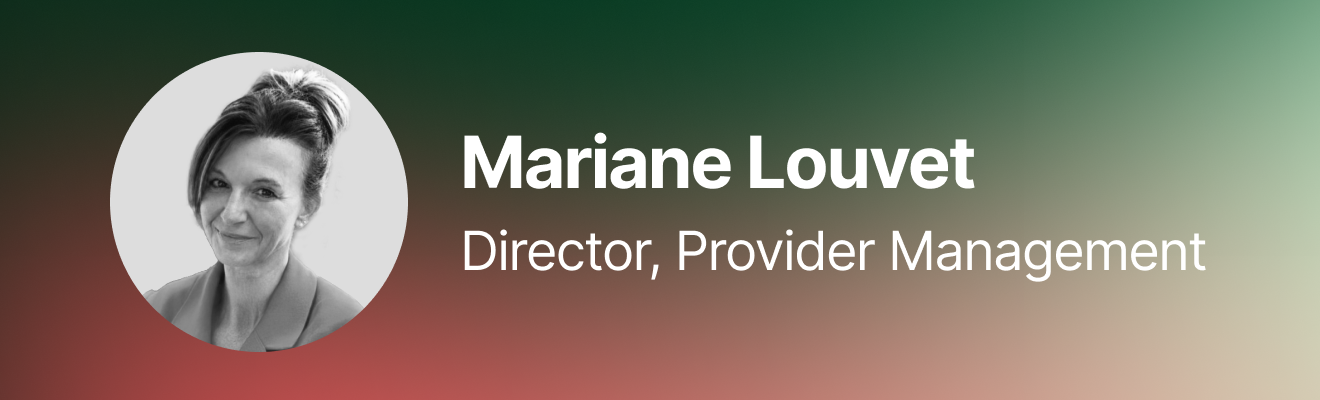
To better understand what that looks like on the ground, we sat down with Jared Adamcik, Senior Director of the MSP Channel, AppDirect, Dave Wallace, Senior Director, MSP Channel, AppDirect, and Mariane Louvet, AppDirect’s Director, Provider Management. Mariane brings a broader market view on how the strongest MSPs are evolving their role and approach. Her perspective is also informed by ITCloud, now part of AppDirect. ITCloud is a leading Canadian cloud technology provider known for its deep MSP expertise and trusted partner relationships across the channel.
Dave added perspective on the AI opportunity and where MSPs need more support. Mariane brought a broader market view on how the strongest MSPs are evolving their role and approach.
How are customer expectations changing the MSP role?
Mariane Louvet: Customer expectations have expanded from support to strategy.
Businesses no longer want an MSP that simply keeps systems running. They want a partner that can help them navigate a more complex technology environment and guide decisions that affect security, growth, and long-term value.
That shift is changing the role in a fundamental way. MSPs are being asked to do more across cloud, communications, security, AI, and the broader technology lifecycle, while still delivering a simple and trusted customer experience.
The strongest MSPs are being deliberate about where they expand. They are not chasing every trend. They are choosing categories that deepen relevance, increase share of wallet, and strengthen the customer relationship over time.
The opportunity is significant, but so is the pressure. The MSPs that lead in this next phase will be the ones that broaden their value in a way that feels strategic, credible, and easy for customers to adopt.

Where do you see the biggest growth opportunity for MSPs today?
Dave Wallace: Right now, the biggest opportunity is AI.
A lot of MSPs I talk to are hearing the same thing from customers: how do we deploy AI in our organization, what tools should we be using, and how do we stay on the cutting edge?
The problem is that many MSPs still have a deer-in-headlights response because they do not feel ready to guide that conversation yet.
That is what makes AI such an important opportunity. Customers are already asking for help. MSPs do not need to manufacture demand. They need trusted partners who can help them respond with confidence.
Beyond AI, there is still a lot of wallet share being missed in categories like internet circuits and unified communications. MSPs often support those environments anyway, but they are not always participating in the revenue.

A lot of MSPs know they need to expand beyond their core stack, but many still hesitate. What usually holds them back?
Jared Adamcik: A lot of it comes down to resources, and support processes. MSPs are the trusted advisor, and they do not want to get out over their skis in areas where they are not really confident. They do not want to bring a solution to a customer if they are not sure they can support it well. That is a reputation risk.
There is also an operational reality here. Most MSPs are rigidly built around a core set of offerings. They have documentation, training, workflows, and staff aligned to the five things they do really well. Bringing in a sixth category, for example, can be a heavy lift. It means new training, new process, new support considerations, and more complexity for the team.
That is why so many MSPs hesitate. It is not because they do not see the opportunity. It is because they do not want growth to create chaos.
Why are more MSPs looking for a partner that combines marketplace scale with the support to grow into new categories?
Jared Adamcik: Because they want a simpler path to expansion. The most successful MSPs want a trusted partner that helps them broaden their offering, support more customer needs, and unlock new revenue without adding significant headcount or complexity.
AppDirect gives them that combination. The AppDirect Marketplace provides access to a broad technology catalog, while the surrounding ecosystem provides the supplier relationships, sales support, and expertise MSPs need to expand with confidence.
That is what makes the model work. It is not just about having more products available. It is about giving MSPs a practical way to grow, serve customers more fully, and capture more of the total tech spend already moving through their accounts.
Why are existing accounts the best place to look for expansion opportunities?
Jared Adamcik: Because the relationship is already there, and so is a lot of the spend.
Our job is to help MSPs understand the depth and breadth of the portfolio so they can capture more of the customer’s total tech spend. Existing accounts are where that happens fastest.
A lot of customers are already spending on internet, communications, cloud, and now AI.
The MSP may already be involved in supporting those environments, even if they are not being paid on the underlying services. That is the gap.
When MSPs start thinking about existing accounts as a way to expand wallet share, the opportunity becomes much more immediate and practical.
AI is getting a lot of attention right now. What are you seeing from MSPs specifically?
Dave Wallace: What we are seeing is that customers are moving faster than most MSPs feel prepared for.
Teams are experimenting, leaders are asking questions, and businesses want to know how to deploy AI in a secure, useful way. That puts MSPs in an interesting position. The demand is there, but many do not yet have the playbook or confidence to lead with it.
The AI opportunity for MSPs goes well beyond resale. The real value is helping customers bring governance, security, and structure to a category that is evolving in real time.
Jared Adamcik: That is exactly right. MSPs need a trusted partner with that expertise. They need support in understanding what tools make sense, what peers in specific industries are doing, and how to help customers deploy AI responsibly.
That is why I think AI is the biggest opportunity in front of MSPs right now and that’s where Devs.ai comes in. Access to every leading LLM, plus the ability to create applications with no coding skills. Customers want this kind of functionality in a secure environment. The need is immediate, and the MSP does not want to be left without an answer.
Devs.ai delivers and gives MSPs the ability to make money on AI right now.
What are the strongest MSPs doing differently?
Mariane Louvet: They are aligning expansion to customer need and operational readiness at the same time.
A lot of partners can see adjacent opportunities, but the strongest ones are disciplined about how they pursue it. They are asking: does this category solve a real problem for our customers, does it fit our delivery model, and do we have the right ecosystem support behind it?
They are also thinking beyond product availability alone. The best MSPs want access to a broader portfolio, but they also want a model that helps them simplify decision-making, preserve customer trust, and scale without adding unnecessary friction.
Keep in mind AI can’t be an afterthought either. Especially given the resource constraints many SMBs are facing and how this is driving adoption and shaping the changing MSP landscape.
Teams are often stretched thin and every technology decision needs to show value quickly. In that environment, AI is not just an innovation trend, it can help reduce manual work, improve productivity, and enable lean teams to do more without adding headcount.
That makes it a meaningful opportunity for MSPs serving SMB customers, particularly when they have the right support model behind them.
If an MSP wants to expand, what is the smartest first move?
Jared Adamcik: Start with the easiest, highest-value areas where revenue is already being left on the table.
That means things like internet circuits, unified communications, and AI. Those are areas where customers are already spending, where the MSP is often already involved in some way, and where the right support model can make expansion much easier.
If a customer needs better bandwidth, a new provider, a new voice solution, or guidance on AI, the MSP should not be defaulting to “go buy that direct.” They are already going to be pulled in when something goes wrong. They might as well have a better process, better visibility, and a way to get paid for participating in that decision.
That is the shift. It is not about becoming everything overnight. It is about becoming the single source of truth for more of the technology decisions customers are already making.
MSPs are under real pressure right now. Customers expect broader guidance, emerging categories like AI are accelerating, and operational resources are still tight.
The MSPs that grow from this moment will not be the ones that try to build everything alone. They will be the ones that find practical ways to expand, protect the customer relationship, and capture more of the customer’s total tech spend through a model they can actually support.
Catch our MSP experts live at Thrive
Want more? Join us at Thrive for “Evolve your MSP business: Become a managed intelligence provider,” where AppDirect’s David Gibson and Mariane Louvet will be joined by Chris Bomberger of Higher Information
Group to explore how MSPs are expanding beyond traditional managed services into AI-powered offerings. The session will unpack what managed AI services look like in practice, what customers are asking for, and how platforms like Devs.ai can help MSPs deliver secure, repeatable AI services while opening up new revenue streams.
Check out this session and other MSP-focused sessions happening at Thrive 2026.
Not registered yet? Grab your ticket.
Get more insights and see how AppDirect helps MSP achieve scalable growth.
Want the full breakdown?
Check out our blog 10 reasons MSPs choose AppDirect. Also, explore the MSP playbook to see how leading MSPs are expanding into telecom, cloud, and AI without creating operational chaos.
Related Articles

Strategy & Best Practices
How an Advisor Locked In Energy Contracts with a Steel Manufacturer Across Four States
See how a trusted technology advisor and Broker Online Exchange (BOX) helped a steel tubing manufacturer secure tailored electricity and natural gas contracts across four states, including a deliberately extended timeline to align with a future solar project. The result: a complex, multi-market energy challenge turned into a coordinated strategy with long-term budget stability.By Amanda Marquez / AppDirect / October 14, 2026

Strategy & Best Practices
Thrive 2026 Ecosystem Blueprint: How to Scale Growth Through Marketplaces and Ecosystems That Matter
If AI is making software creation faster and cheaper, distribution becomes the differentiator. This post previews four Thrive 2026 breakouts for ISVs and ecosystem leaders to unify partner channels, prove ecosystem ROI, and scale indirect revenue through marketplaces and ecosystems.By Denise Sarazin / AppDirect / September 4, 2026

Strategy & Best Practices
Thrive 2026 Lifecycle Roadmap: Expand Customer Value Through One Platform
If your customers are drowning in vendors, invoices, tickets, and spreadsheets, lifecycle management is the fastest path from operational chaos to measurable control. This post previews four Thrive 2026 breakouts to reduce manual work, close visibility gaps, and eliminate operational debt across network, mobility, expense management, and hardware lifecycle.By Denise Sarazin / AppDirect / September 2, 2026